

Chaston Tavares Brings Us Behind The Scenes! Here’s What You Don’t See on TV When Watching A Football Game…
Every week, we sit down in front of the TV or turn on the radio to enjoy a sporting event. But have you ever wondered how much work goes into calling one of those games?
As some of you may know, I call high school sporting events on 92.9 The Lake and am also fortunate enough to be a part of both the radio and ESPN+ broadcasts for McNeese Athletics.
Believe it or not, we don't just show up to a game, throw on a headset, and start talking. It takes a lot of time, effort, and sometimes a little sweat and tears to pull off a broadcast, regardless of the level or platform.
I just wrapped up a pretty chaotic week. Between high school football, my regular duties at Townsquare Media in Lake Charles on Gator 99.5, and preparing to call the Battle of the Border rivalry between McNeese and Lamar, I didn't have much downtime.
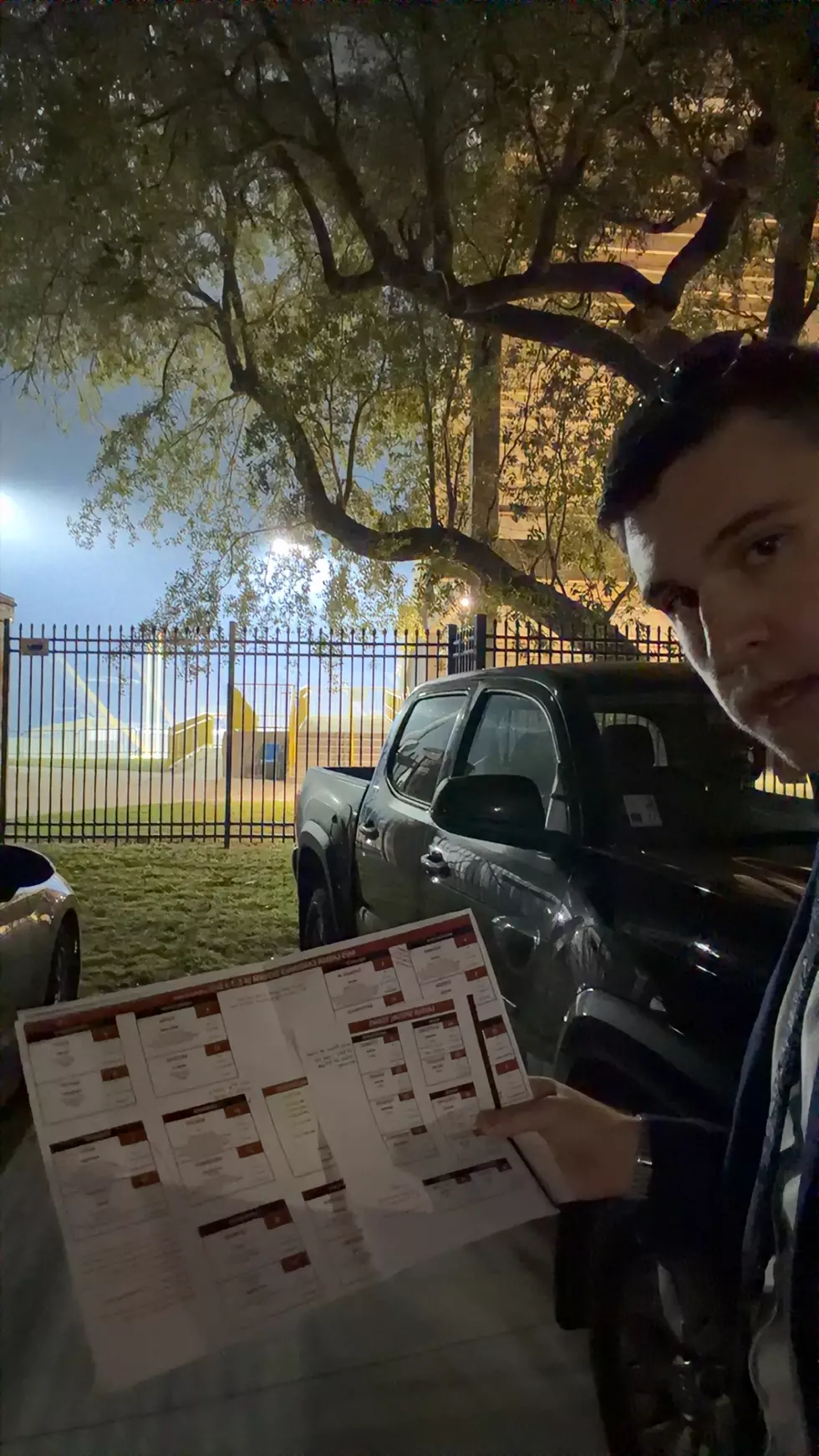
I took some photos throughout the week to give you guys a behind-the-scenes look at what goes into calling a game and to share a few things you may not know about being a sports broadcaster.

The Preparation Starts Well Before Game Day
I'm fortunate enough to know my broadcast schedule WEEKS, and sometimes MONTHS, in advance. Some national broadcasters may only have a week or even a few days to prepare for their next assignment.
Knowing my schedule allows me to get a head start on things, depending on my work schedule and how the games fall on the calendar.
I will say that my preparation for a high school football game on 92.9 The Lake is much different from my preparation for an ESPN+ broadcast. A lot of that simply has to do with how much more information is available at the college level.
There's a whole lot of information available at the click of a button. The challenge is figuring out what information is important and how you're going to use it.

What Are Those Giant Sheets in Front of Broadcasters?
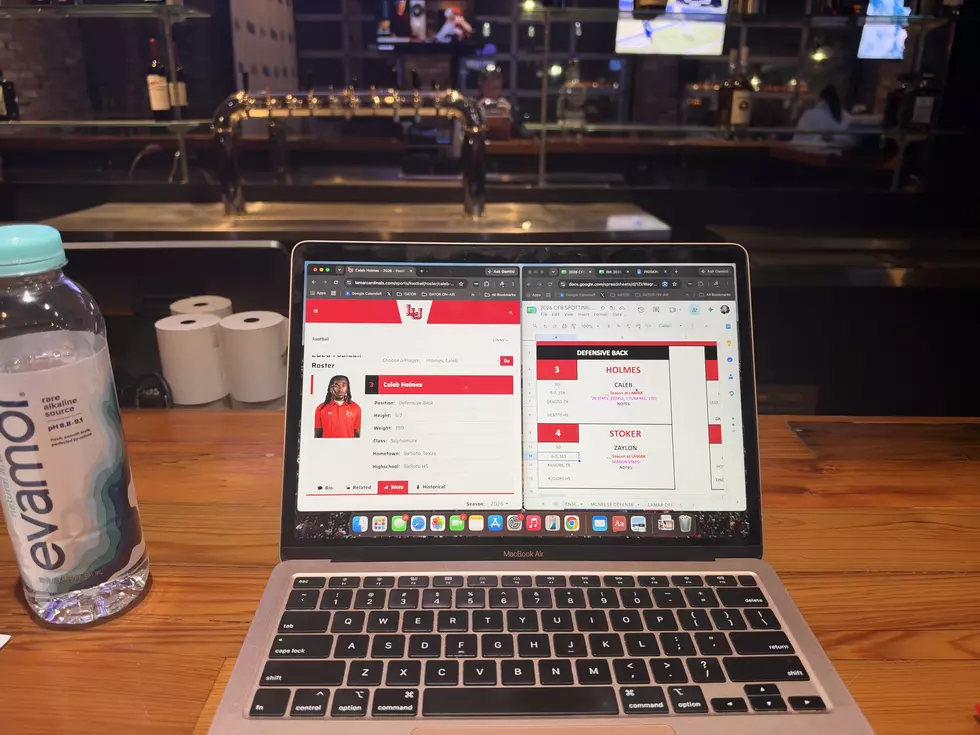
One of the most important tools for a play-by-play broadcaster is something we call a spotting board.
These boards contain valuable information about the players who could see action during a game. What information goes on those boards is entirely up to the broadcaster and what they're comfortable with.
Some broadcasters have companies or individuals create what we call "shell boards." Those boards already have information like a player's name, number, height, weight, hometown, and previous school. From there, the broadcaster can add their own notes and information.
That's not how mine are done.
I spent YEARS trying to find a template and a method that worked for ME. Eventually, I ended up creating my own spreadsheet for my spotting boards, and I manually input every piece of information you see on those sheets. If I have a football game on Saturday, I try to have the basic information on my boards completed by Monday or Tuesday of game week.
Each week, we're typically provided with a two-deep depth chart, which lists the first two players at each position. That's what I use to build my football spotting boards. The rest of the week is spent researching players, reading articles, watching film, digging through statistics, and finding interesting stories about the guys who could make an impact on Saturday.
Even after my boards are printed, I'm constantly writing additional notes next to players and position groups throughout the week.

Most Sports Broadcasters OVERPREPARE
Here's something you may not know about sports broadcasters. Most of us prepare WAY more information than we'll ever actually use.
I walk into every broadcast with notes on individual players, coaches, teams, statistics, and storylines that I know I'll probably never get to.
So, why spend all that time preparing something you may never use? Because you never know what's going to happen in a sporting event.
A backup quarterback could be forced into action. A freshman who hasn't played much all season could make the biggest play of the game. A player could be approaching a school record. You want to be prepared for whatever story unfolds in front of you.
I'd much rather walk out of a stadium with a bunch of notes I never used than find myself in a situation where I need information I don't have.
We Meet With the Coaches Throughout the Week
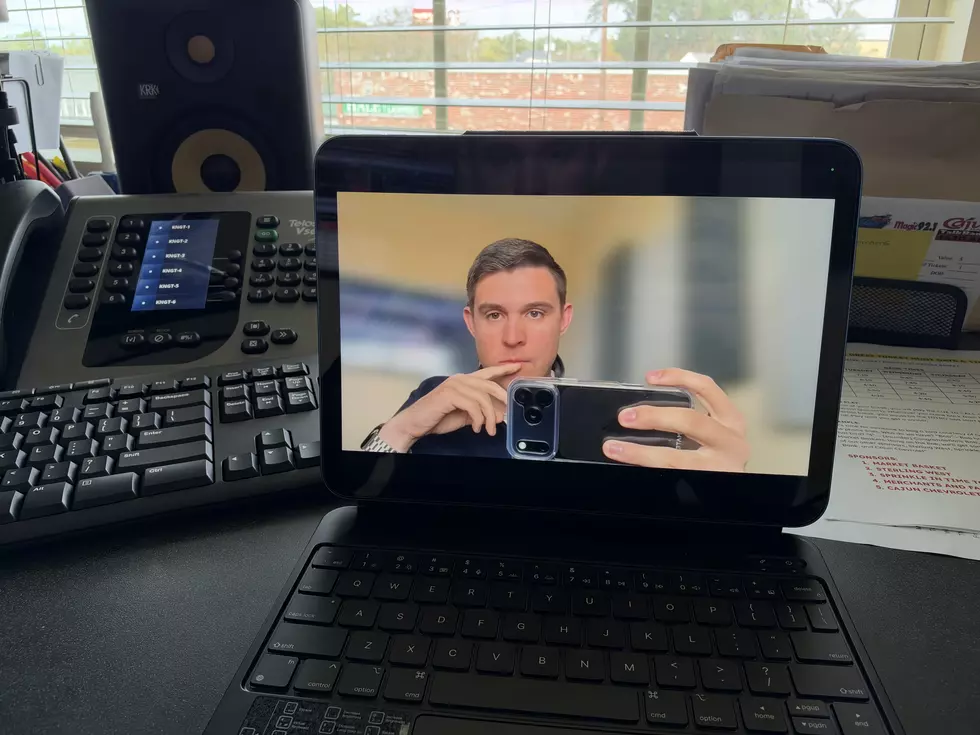
A lot of the information you hear during a broadcast comes directly from the coaches. Throughout the week, we typically visit with the head coaches of both teams we're covering. These are often referred to as production meetings or production calls.
For this past weekend's Battle of the Border, we visited with McNeese Head Coach Matt Viator on Monday, and I had a video call with Lamar Head Coach Pete Rossomondo on Thursday.
These conversations allow us to ask questions about individual players, injuries, position battles, team strengths, challenges, and what the coaches are seeing from their teams.
Sometimes, the most interesting stories you hear during a broadcast come from a simple question we asked a coach earlier in the week.
Statistics can tell us a lot about a team, but hearing directly from the people coaching those players every day gives us a much better understanding of the bigger picture.
The Unsung Heroes of College Athletics
If there's one group of people who don't get nearly enough credit, it's the Sports Information Directors, better known as SIDs. (Shoutout to Matt Bonnette at McNeese; he is the best!)
National television networks often have their own research, statistics, and analytics departments to help broadcasters prepare for games. At many smaller levels of college athletics, we rely heavily on the work of the Sports Information Directors.
At the FCS level and in conferences like the Southland Conference, teams don't always receive the same amount of media coverage as some of the bigger schools across the country.
The SIDs help us tell those stories by providing game notes, stats, player bios, game recaps, historical information, and so much more. They're also the people we turn to when we have questions throughout the week or need to double-check something before going on the air.
Our jobs would be MUCH more difficult without them. They're some of the hardest-working people in the business, and they deserve a whole lot more recognition than they receive.
What Happens on Game Day?
Saturdays are the fun days. That's when we finally get to put all of the hard work from throughout the week to use.
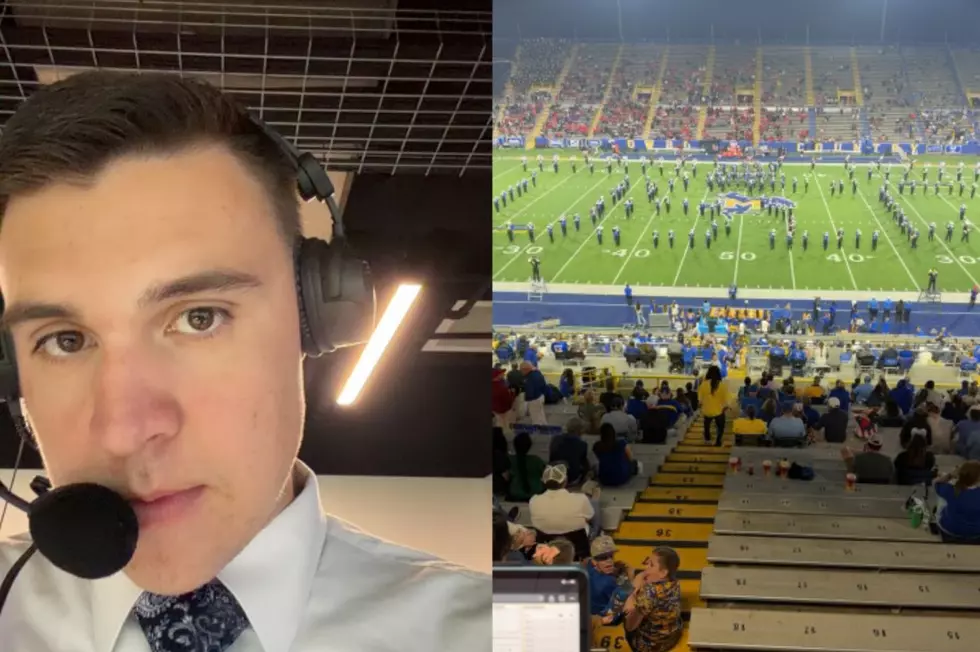
I try to arrive at the stadium or arena AT LEAST three hours before the game starts. That's partly because I always try to prepare for the worst. If something isn't working correctly, I'd rather have plenty of time to figure it out than be rushing around 15 minutes before we go on the air.
From checking equipment and going through on-camera rehearsals to meeting with the SIDs for last-minute information, there's plenty to do before kickoff.
Oh, and we can't forget about pronunciations... One of the most important things we can do as broadcasters is make sure we're pronouncing the names of the players correctly. These athletes and their families deserve that.
By the time kickoff rolls around, it's finally time to throw on the headset and have some fun.

It Takes More Than Two Guys With Headsets
When you're watching a sporting event on TV, you typically see or hear the play-by-play broadcaster, color analyst, and sideline reporter. But there are SO many more people involved in bringing that game to your television.
The producer plays a major role in shaping the story of the broadcast. There are directors, camera operators, audio technicians, replay operators, graphics operators, and several other people working behind the scenes to make sure everything runs as smoothly as possible.
One of the hardest things I've had to adjust to in television broadcasting is having a producer talking in my ear while I'm talking on the air.
Imagine trying to carry on a conversation with someone while another person is talking directly into your ear. Now, imagine doing that while watching a football game, identifying players, keeping up with statistics, and describing what's happening on the field. Oh, and you're doing it all on LIVE television!
Throughout the game, the producer is communicating with me through my headset about upcoming replays, graphics, planned segments, commercial breaks, or even when our sideline reporter has something to share. I have to process all of that information while continuing to call the game without the viewer at home ever knowing what's being said in my ear.
It's something that takes some getting used to, and it's a part of television broadcasting that I don't think many people realize is happening.
We're just the faces and voices you see and hear during the broadcast. There are SO many talented people behind the scenes that you may never see or hear, but they're just as important, if not more important, to the success of the broadcast.

How Do Broadcasters Identify Players So Quickly?
This is probably one of the more common questions people have about sports broadcasting. How in the world do we know who made a tackle, caught a pass, or is checking into a basketball game so quickly? A lot of that comes from preparation, watching film, studying rosters, and becoming familiar with jersey numbers throughout the week.
I always talked about how much I hated doing homework when I was in school. Somehow, I ended up in a profession where, if you don't do your homework, you're in MAJOR trouble!
In football, broadcasters can also be assisted by someone called a spotter. Their job is to help identify players involved in a particular play, especially when there are several things happening at once. Spotters are common on major national broadcasts, although you may not always have one at the smaller levels.
That's another reason why those spotting boards are so important.

Every Broadcaster Does Things Differently
One of the things I've learned throughout my years of broadcasting is that there isn't necessarily a right or wrong way to prepare for a game. Every broadcaster has their own style, and the same goes for their preparation. What works for one person may not work for another.
I've changed the way I prepare for games countless times over the years, and I'm sure I'll continue to make changes as I learn and grow in this profession.
The funny thing about sports broadcasting is that you can spend an entire week preparing for a game, and within the first five minutes, something can happen that completely changes the story you thought you were going to tell.
Our job isn't to determine the story before the game starts. Our job is to be prepared to tell whatever story unfolds in front of us.
So, the next time you sit down to watch a football game on a Saturday afternoon or turn on the radio to listen to your favorite team, just know that there were countless hours of work and a whole lot of people involved in bringing that game to you.
And as much work as it may be, there's nothing quite like putting on that headset and getting to tell the story of a sporting event.
As my good buddy Bruce Merchant always says, "It beats working for a living." I understand every day how fortunate I am to get to continue to live out my childhood dream of calling live sports on radio and TV. There's one thing for certain... I wouldn't trade it for the World.

All-Time Favorite McNeese Cowboy Players
Gallery Credit: Chaston Tavares
